Print shops without updated equipment are missing the wave. Many still lean on outdated presses or outsource jobs entirely, which drives up cost-per-piece, stretches turnaround times, and hands margin to competitors who invested in the right systems.
This checklist walks through the printing, personalization, and finishing equipment shops need to run a profitable, in-house direct mail operation.
Key Takeaways
- Sync printing, addressing/personalization, and finishing so jobs move without bottlenecks
- High-speed inkjet presses cut cost-per-piece and beat offset or toner on speed
- Variable data printing drives personalization and higher direct mail response rates
- Choose equipment by payback period, cost-per-piece, and total cost of ownership—not sticker price
Why Direct Mail Equipment Matters for Print Shops
Marketers are tired of fighting spam filters and inbox fatigue. Validity's State of Email in 2024 report found average inbox placement sits at just 86%, with 7% landing in spam. That friction is enough to push marketers back toward physical mail.
That shift is showing up in the numbers. Direct mail spend hit $37.3 billion in 2024, and most brands plan to grow that budget. But volume alone won't help a print shop that can't produce it efficiently.
Here's the practical problem: shops without proper personalization and finishing equipment often turn away short-run, high-personalization jobs, or they outsource them to a competitor down the street. That's margin walking out the door.
What this means for equipment planning:
- Marketers now run direct mail alongside email, digital banners, and mobile campaigns, not as a standalone channel
- Shops need to support quick turnarounds and personalized runs, not just long, uniform jobs
- Finishing and inserting capacity has to keep pace with the print engine, or the press becomes a bottleneck
Core Equipment Checklist: Printing & Personalization Systems
Digital/Inkjet Envelope and Postcard Presses
This is the engine of any direct mail operation. Modern digital presses built on HP PageWide and HP TIJ 4.0 thermal inkjet technologies print full-color, variable data pieces at production speed without the plate costs and changeover delays of offset.
Look for:
- Full CMYK color with four-edge bleed
- Speeds that scale from short runs to high volume (current systems run 7,000 to 20,000 envelopes per hour)
- Compatibility with variable data workflows
Variable Data Printing (VDP)
Personalization is what moves response rates. USPS reports that 88% of marketers say personalized direct mail meaningfully improves response, and personalization can lift marketing ROI by 10% to 30%.
ANA's 2023 benchmark data reinforces the case: direct mail to house lists posted a 15.6% response rate and 160.9% ROI.
Any press you're evaluating needs a RIP and imposition workflow that handles names, offers, images, and QR codes without slowing production.
Substrate Handling & Printhead Flexibility
Direct mail isn't just flat postcards anymore. Shops now print on:
- Standard envelopes (around 1/48" thick)
- Padded and bubble mailers
- Corrugated packaging pieces
A feeder and printhead gap that handles envelopes up to 3/8" and packaging substrates up to 1/2" thick opens the door to packaging and fulfillment work without buying a second machine. Compact benchtop presses top out nearer 1/8", so match the machine to the heaviest piece you intend to run.

Ink Quality and Durability
Mail takes heavy handling between the press and the mailbox. Pigment inks that resist water, fading, and scratching hold up through USPS sorting and delivery far better than dye-based alternatives. Ask for sample pieces run on your own stock and handle them yourself, instead of trusting a "water-resistant" label alone.
Document Signers
For high-value letter campaigns, some shops add document signers to apply authentic-looking signatures at production speed. That extra touch strengthens the personal feel that drives response without slowing the line.
Product Placement: iJetColor Solutions
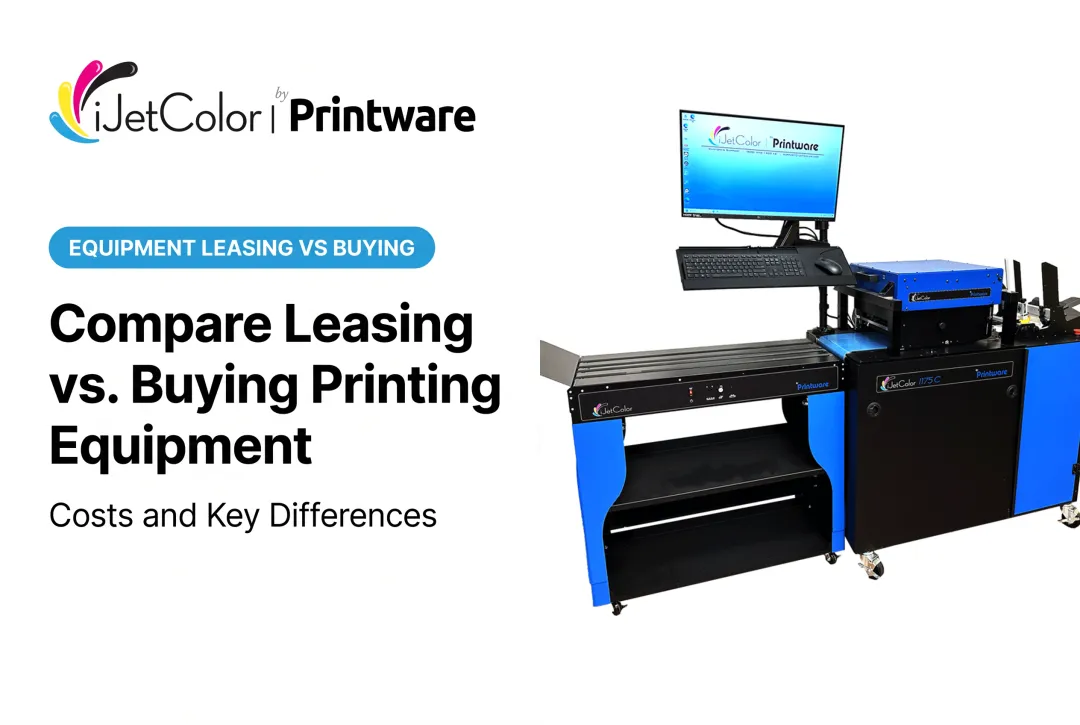
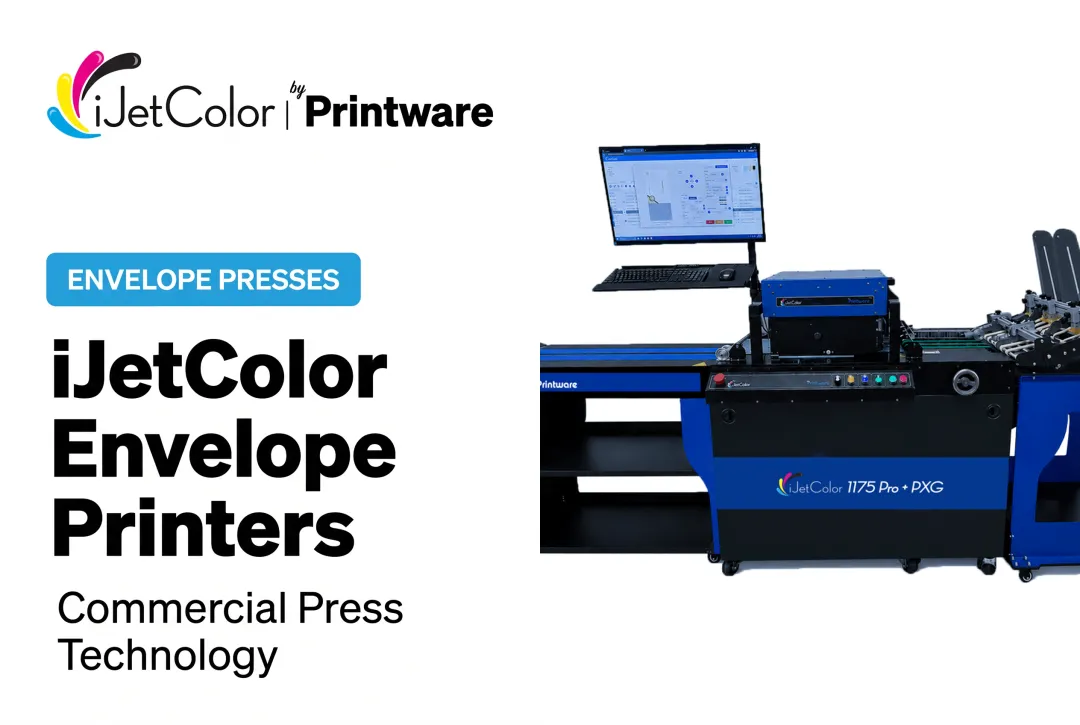
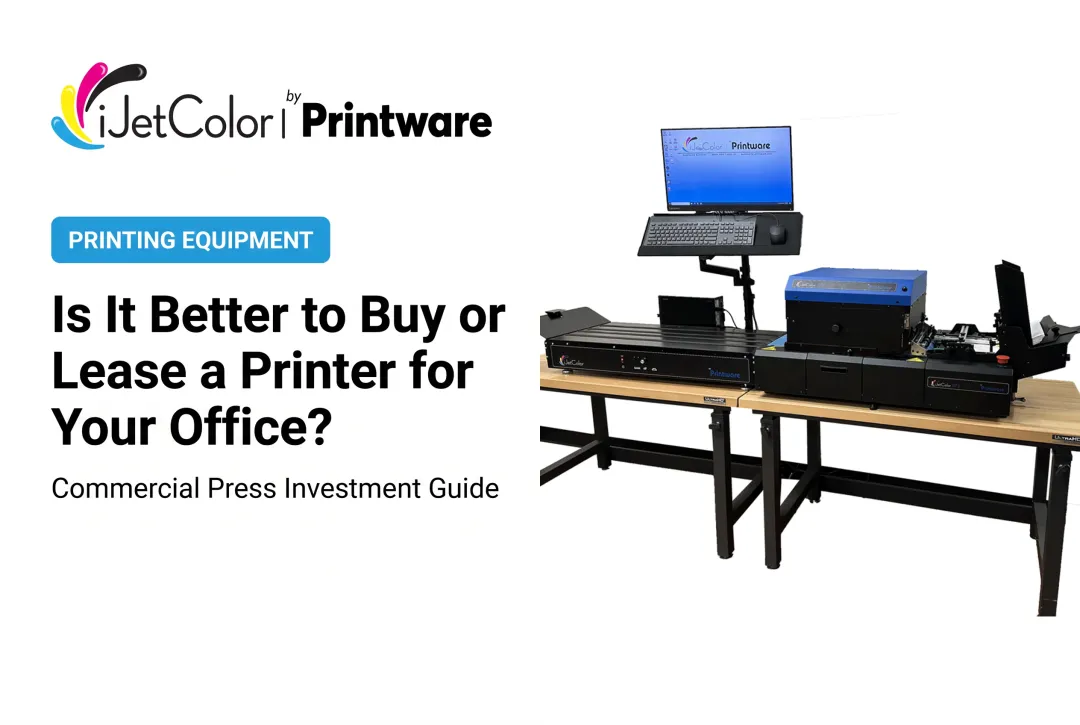
Shops looking to bring outsourced envelope and packaging work back in-house have a manufacturer-direct option in iJetColor by Printware. Four presses, all built on HP thermal inkjet printheads, print full-bleed, full-color, variable-data envelopes at commercial direct-mail scale:
- HP iJetColor 1275 Pro — up to 20,000 #10 envelopes per hour on an HP TIJ 4.0 108 mm CMYK printbar, with a 1,000-envelope rotary vacuum feeder and an 8 ft smart exit conveyor
- HP iJetColor 1175 Pro + PXG — 10,000+ envelopes per hour and 18 ips on packaging, handling paper bags and small corrugate up to 1/2" thick, rated for 150,000+ envelopes a month
- HP iJetColor 1175C — 6,210 to 10,000+ envelopes per hour from a single-operator console, rated for 100,000+ envelopes a month
- HP iJetColor 1175 — up to 7,000 #10 envelopes per hour on a compact benchtop footprint

Every model runs pigment-based HP ink that is water, fade, and scratch resistant and prints full bleed with PMS color matching from a PDF-based DFE and RIP. All three 1175 models can also be upgraded with iJetColor Flow 2.0 RIP software for CMYK True Color, print-quality optimization, and a cost calculator with CSV export.
Finishing & Mail Preparation Equipment Checklist
Printing is only half the job. Finishing equipment turns printed sheets into mail-ready pieces:
- Paper folders: handle high-volume folding of flyers and letters before insertion or mailing
- Document/letter inserters: automate envelope stuffing for mass mailings, with matching and verification to prevent misfires
- Pressure sealers: combine folding and sealing in one pass, eliminating envelopes entirely for self-mailer formats
- Envelope openers: process reply mail and returns for shops handling inbound response
Skipping finishing automation is a common bottleneck. A shop with a fast press but manual folding and stuffing will still lose the turnaround advantage that justified the press purchase.
Choosing the Right Equipment: Key Factors to Evaluate
Before you commit capital, weigh these four factors against your shop's monthly volume, job mix, and growth plans.
Cost-Per-Piece and Payback Period
Calculate payback by comparing monthly job volume against the equipment cost, factoring in ink, labor, and maintenance savings. Ask each vendor to run the numbers on your actual job mix rather than a generic model. iJetColor's own position is that its presses are faster and more profitable for short-run envelope production than offset, outsourcing, or toner.
More jobs per month shortens the payback window. Fewer jobs, or heavier substrates with higher ink costs, stretch it out.
Run-Length Flexibility
Short-run jobs are the norm for most print shops. A press requiring lengthy makeready between jobs eats into your profitable production hours. Systems with minimal setup (some need only one or two envelopes to dial in a job) waste far less material on changeovers.
Support and Service Model
Downtime kills profitability faster than almost anything else. Manufacturer-direct support models typically offer:

- Faster diagnosis since the same company built the machine
- Next-day parts availability under an active service contract
- Remote diagnostics and live response guarantees during business hours
Third-party service contracts often add a layer of delay: parts orders get routed through a distributor, and technicians may not have direct manufacturer access to firmware updates.
Scalability
Buy for where your business is headed, not just where it is today. A shop growing from a few thousand pieces a month to 150,000+ needs a press line that scales without a full equipment swap. Check the maximum recommended monthly volume, not just the top print speed.
Frequently Asked Questions
How much does a direct mailer cost?
Cost varies by print method, paper stock, personalization level, and finishing needs. Inkjet equipment can lower cost-per-piece on short runs compared with offset or toner-based systems.
What is direct mail printing?
Direct mail printing is the production of physical marketing materials (postcards, letters, envelopes) that are addressed and mailed to specific recipients, often personalized with variable data.
Is direct mail making a comeback?
Yes. Rising email spam filters and inbox fatigue are pushing marketers back toward physical mail. Industry estimates put U.S. direct-mail ad spend near $37.3 billion in 2024, up about 2.6% year over year.
Is direct mail illegal?
No. Direct mail is legal in the U.S. when it complies with USPS mailing regulations and relevant data privacy laws, such as HIPAA for healthcare-related mailers or CAN-SPAM rules for any related digital outreach.
What equipment is essential for starting a direct mail print operation?
A core setup includes a digital or inkjet press with variable data printing capability, plus finishing equipment like a folder and inserter. Most shops add a pressure sealer as volume grows.
How do I choose between offset and digital/inkjet printing for direct mail?
Offset works best for very high-volume, uniform jobs where the design doesn't change. Digital and inkjet printing suit shorter runs that need personalization, fast turnaround, and lower makeready costs.