Yet plenty of print shop owners still lump "inkjet printer" and "inkjet press" into the same category. That confusion, combined with sticker shock over legacy makeready waste and genuine uncertainty about ROI, keeps a lot of profitable equipment decisions stuck in neutral.
This guide breaks down how inkjet digital printing presses actually work, where they earn their keep in real production environments, and how to build a business case for switching. We'll also look at how vendors like iJetColor, with its HP PageWide and HP TIJ 4.0 thermal inkjet systems, fit into that decision.
Key Takeaways
- Inkjet presses fire ink directly onto substrates from digital files, eliminating plates entirely
- Production presses differ from desktop printers in duty cycle, integration, and speed
- Drop-on-demand technology dominates commercial color printing today
- Switching from offset or toner makes short-run, variable-data work faster and more profitable than offset, outsourcing, or toner
- The right press choice depends on substrate, run length, and vendor support model
What Is an Inkjet Digital Printing Press?
An inkjet digital printing press is an industrial-grade system that deposits precise ink droplets onto substrates guided entirely by digital files. No plates. No film. No chemical processing between design and finished piece. Send a file, and the press prints it, whether that's one piece or one million.
Production Presses vs. Desktop Printers
The gap between a production inkjet press and a home office inkjet printer isn't just size. It's engineering philosophy.
- Duty cycle: Production presses run continuously for hours or entire shifts; desktop printers are built for intermittent, single-sheet jobs
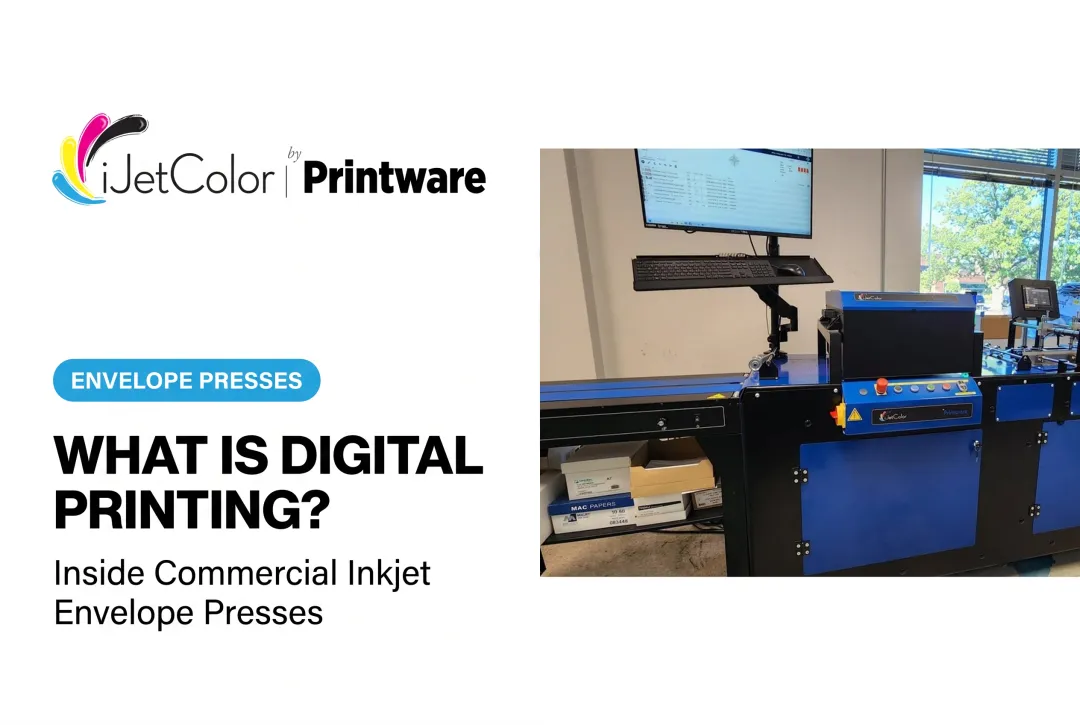
- Integration: Industrial presses connect to substrate feeders, inline finishing equipment, and workflow software as one system
- Service life: Components are engineered for millions of impressions, not a few thousand pages a year
A desktop printer is a tool. A production press is a manufacturing line.
Digital Press Is a Broader Category Than Inkjet
"Digital press" covers both inkjet and laser/toner equipment. Inkjet presses use liquid ink jetted through nozzles. Toner-based digital presses use dry powder fused with heat and pressure. Both skip plates, but the mechanics and the resulting cost structure differ substantially.
Drop-on-Demand vs. Continuous Inkjet
Industrial presses generally rely on one of two jetting approaches:
- Drop-on-Demand (DOD): Ejects a drop of ink only when the image requires it
- Continuous Inkjet (CIJ): Continuously circulates and jets ink, diverting unused drops back into the system
DOD dominates production color printing because of its precision and flexibility with ink formulations. That dominance tracks with broader market movement: cut-sheet production inkjet page volume grew an estimated 30% to 40% in 2022, while continuous-feed inkjet volume rose roughly 14%, according to industry data compiled by Printing Impressions. That's a meaningful jump for equipment most shops purchase to last a decade or more.

How Do Inkjet Digital Printing Presses Work?
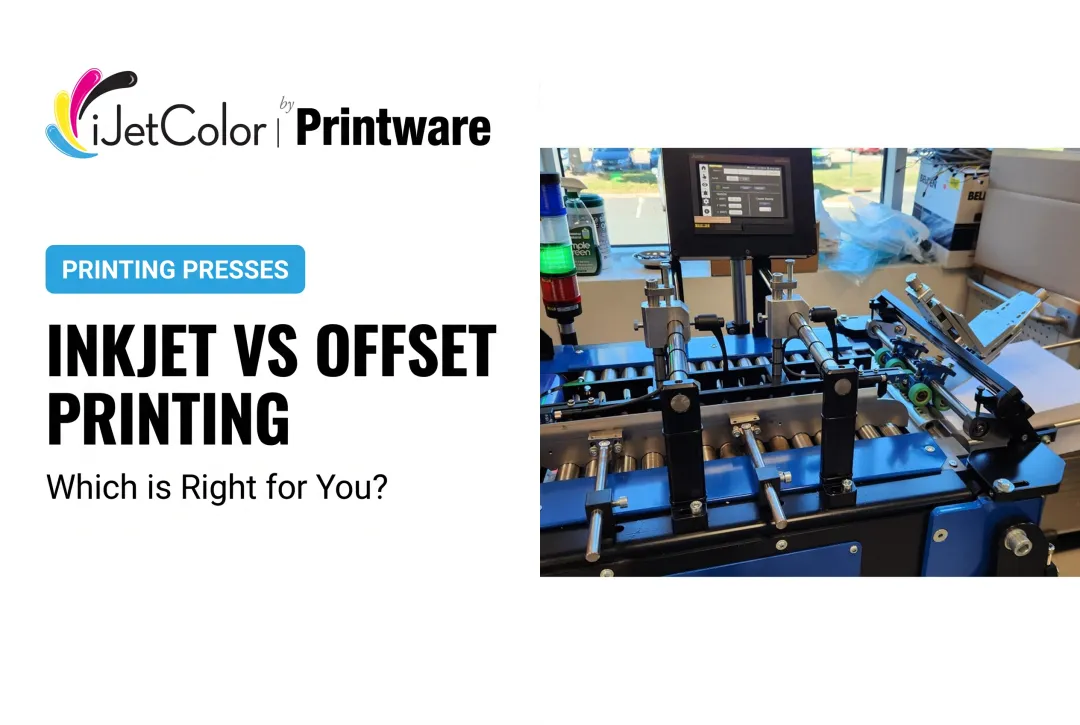
A production inkjet press is really five systems working in sync: printheads, ink delivery, substrate transport, drying, and workflow software. Miss the timing on any one of them, and quality drops even if the printhead itself is flawless.
Piezoelectric vs. Thermal Printheads
Printheads generally use one of two drop-ejection methods:
- Piezoelectric: A crystal flexes under electrical voltage, physically forcing ink out of the nozzle
- Thermal: A heating element vaporizes ink to form a bubble that expels a droplet
Here's where a lot of buying guides get sloppy: not every press marketed as "PageWide" uses the same mechanism, and not all of them are piezo. HP's PageWide technology, including the HP FI-1000 printhead used in iJetColor's 1175 series, is documented thermal inkjet technology paired with pigment-based inks. Confirm the ejection method before you compare specs across vendors.
Curing and Drying Happen Almost Instantly
Wet ink can't go straight to finishing, so presses use one of several drying methods immediately after printing:
- Heat and airflow (evaporation), the most common approach for document production
- UV curing, typically reserved for label applications
- Infrared drying, used on select web and packaging presses
Getting this step right prevents smudging and lets output move straight into folding, inserting, or mailing equipment without a holding period.
Variable Data Printing Without Slowing Down
This is inkjet's signature advantage. Every piece coming off the press can carry unique text, images, or addressing, without pausing production between records.
Personalization pays off, too: 88% of marketers say personalized direct mail meaningfully improves response rates, according to USPS research on direct mail ROI. Try that with offset plates and you're stopping the press for every variation.
Workflow Software Ties It Together
RIP software manages file intake, color accuracy, and communication with downstream finishing equipment. iJetColor's proprietary iJetColor Flow 2.0, for example, handles:
- Job previews and sortable job queues
- ICC and PMS color matching
- True Color Technology for direct CMYK printing on HP FI-1000-equipped presses
Handling Diverse Substrates
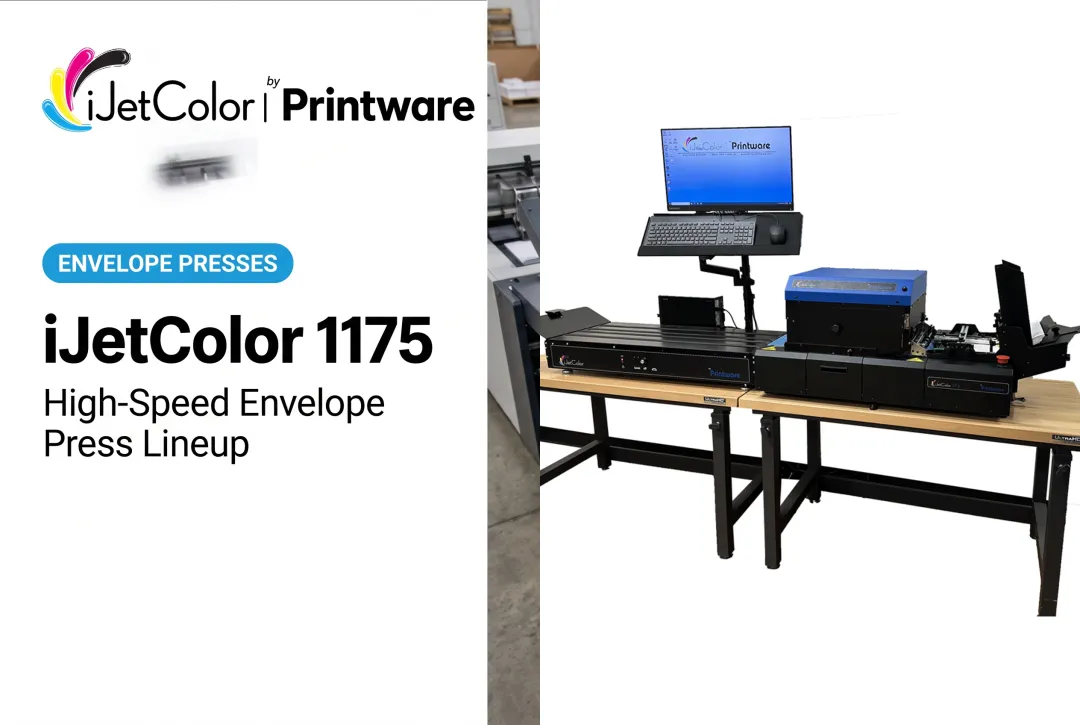
Modern presses aren't limited to standard paper stock. Feed and printhead clearance let systems like the iJetColor 1175 Pro + PXG run envelope stock up to 3/8 inch thick and packaging substrates up to 1/2 inch.
Full-bleed capability prints color to all four edges — essential for envelope and packaging work where there's no margin to hide an unprinted edge.
Types and Applications of Inkjet Digital Printing Presses
Commercial inkjet presses span high-speed envelope and packaging systems as well as broader short-run and transactional lines. Low setup cost and speed make them a fit across several print categories:
| Application | Why Inkjet Wins Here |
|---|---|
| Direct mail & envelopes | Full-bleed, variable data, no plates |
| Transactional (statements, invoices) | Fast changeover for account-level personalization |
| Short-run books | Economical runs well under offset's break-even point |
| Packaging & labels | Prints directly onto pre-converted substrates |
Envelope and packaging presses are among the faster-growing niches here. Printing full color with four-edge bleed directly onto pre-converted envelope stock, without plates, wasn't practical with older digital technology. It is now.
Who's actually buying this equipment? A wide range of operations:
- Franchise print shops (Minuteman Press, AlphaGraphics, Sir Speedy, Allegra locations)
- Mailing service providers and fulfillment centers
- Universities running high-volume administrative and enrollment mail
- Insurance companies handling in-house statement and policy printing
- Government agencies with correctional, election, and administrative print needs
Key Benefits of Investing in an Inkjet Digital Printing Press
Inkjet digital presses change the economics of short-run and high-volume work alike. Gains show up in turnaround time, cost per piece, waste rates, and overall equipment utilisation.
Shops that make the switch typically see advantages in four areas:
- Faster short-run turnaround: Eliminating plates cuts the makeready time that eats into small-job profitability. Some inkjet systems need just one or two pieces to dial in a job, so shops can say yes to a 500-piece order without losing money on it.
- Lower cost-per-piece at scale: Inkjet's cost advantage compounds as volume climbs. iJetColor positions its presses as faster and more profitable for short-run envelope production than offset, outsourcing, or toner. That math makes bringing high-volume mail work in-house look like the obvious move rather than a risk.
- Less waste, better sustainability numbers: Offset plate-setup waste does not exist in a plateless workflow. Lower spoilage rates improve margin and give print operations a cleaner sustainability story for environmentally conscious clients.
- Financing that fits cash flow: Through iJetColor's partner Synergy Financial Resources, buyers can start with zero payments upfront and 90-day deferred payments, so a well-matched press has time to earn before the first payment comes due.

Real-World Proof: iJetColor 1175 Pro + PXG
iJetColor by Printware, based in St Paul, Minnesota, builds its envelope and packaging presses around HP PageWide and HP TIJ 4.0 thermal inkjet technologies. The iJetColor Pro 1175P won PRINTING United Alliance's 2020 Product of the Year in the Digital Press category.
Production numbers that support the investment case:
- Speeds of 10,000+ envelopes per hour, with packaging running at 18 inches per second
- Feed clearance for envelope stock up to 3/8 inch thick and packaging substrates up to 1/2 inch
- Pigment-based HP ink that is water, fade, and scratch resistant
That durability matters for pieces that have to survive a mailbox, a warehouse, or months in a filing cabinet. On the financial side, iJetColor makes the case that in-house production is faster and more profitable for short-run envelope work than offset, outsourcing, or toner. Those are numbers worth running against your own volumes and job mix before you commit to a purchase.
Inkjet vs. Offset vs. Toner: Which Printing Technology Fits Your Business
The right press depends on your job mix—run length, personalization needs, and how often jobs change—not on a single “best” technology.
| Factor | Offset | Toner | Inkjet |
|---|---|---|---|
| Setup | Aluminum plates, longer makeready | No plates, digital setup | No plates, near-instant changeover |
| Best run length | Long, static runs | Short to medium runs | Short to medium runs, especially variable data |
| Customization | Difficult once plates are made | Record-level personalization | Record-level personalization at production speed |
| Cost driver | Plate and makeready waste | Click charges, coverage costs | Ink coverage, drying capacity |
Setup time is often the deciding factor. Offset needs physical plates burned and mounted before a single sheet runs. Toner and inkjet skip plates entirely—load a file and go. That gap alone separates a 300-piece rush order from a 50,000-piece catalog run.
Cost efficiency flips with volume. Offset still wins on very long, unchanging runs where plate cost amortizes across huge quantities. Toner fits short-to-medium static work but click charges and coverage costs climb fast. Inkjet pulls ahead on short-to-medium runs and anything personalized, because there is no plate cost to spread and no per-click meter.
Flexibility is inkjet's clearest edge. Once an offset job is set up, changing content means new plates. Inkjet supports on-the-fly personalization and design changes between jobs, or even within the same job, without touching the press mechanically.

Frequently Asked Questions
What is digital inkjet printing?
Digital inkjet printing is a plateless method that uses digital files to control inkjet nozzles, firing precise ink droplets directly onto a substrate. It allows on-demand, fully customizable output without any physical prepress step.
Are inkjet printers still a thing?
Yes, and adoption is growing, particularly in industrial settings. Speed, variable data, and low setup costs make production inkjet a strong choice over offset and toner for many commercial jobs.
What is the difference between an inkjet press and a regular inkjet printer?
A production inkjet press is engineered for continuous, high-volume industrial output integrated into a full production line. A consumer or office inkjet printer handles lower-volume, intermittent single-sheet jobs.
How fast are commercial inkjet digital printing presses?
Speeds vary widely by model and substrate. iJetColor's envelope presses, for example, range from up to 7,000 #10 envelopes per hour on the benchtop 1175 to up to 20,000 per hour on the high-volume iJetColor 1275 Pro.
How much does an inkjet digital printing press cost?
Pricing varies significantly based on press size, printhead technology, and application. Most buyers compare options by ROI and payback period rather than upfront price alone.
What is the typical ROI or payback period for switching to an inkjet press?
Shops model payback from lower cost-per-piece, less labor, and no prepress, so actual timelines depend on job volume and mix. iJetColor's own position is that its presses are faster and more profitable for short-run envelope production than offset, outsourcing, or toner.