Introduction
Commercial printers are rethinking how they produce envelopes. Offset presses that once handled every job now sit idle between long runs, while toner-based digital systems struggle to keep per-piece costs down.
Offset-lithography demand has been shrinking at a 2.5% CAGR, falling from $354.4 billion in 2019 with further declines projected through 2029, according to a Smithers market report on digital versus offset printing.
Meanwhile, short-run envelope jobs remain a headache for print shops still relying on offset or outsourcing. High makeready costs eat into margins, turnaround times drag, and sending work outside means losing control over quality and deadlines.
This article breaks down the iJetColor 1175: what it is, the technology behind it, its cost and ROI profile, where it fits best, and how it compares against offset and toner alternatives.
Key Takeaways
- Delivers durable, water-resistant output with HP PageWide pigment inkjet technology
- Cuts short-run waste by removing plate changes and offset makeready
- Ships on the iJetColor Ink-Only purchase plan with a 5-year service program
- Prints full-bleed, variable-data envelope jobs at production speed
- Includes manufacturer-direct service, backed by the iJetAdvantage service and supply agreement
What Is the iJetColor 1175?
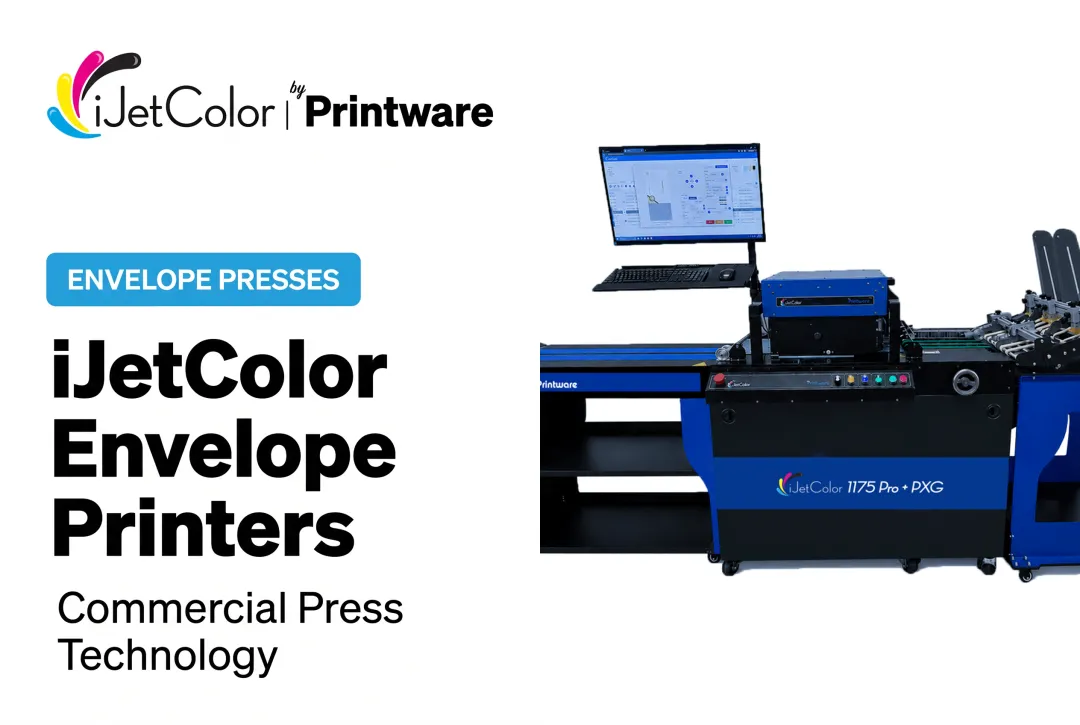
The iJetColor 1175 is a high-speed digital inkjet envelope press made by iJetColor, a brand of Printware, a company with more than 40 years in the printing industry. It's designed for one specific job: letting commercial printers, mailing providers, and in-house print operations run short-to-mid volume envelope work profitably, without shipping it out to a trade printer.
That's a meaningful shift. Many shops still outsource envelope jobs because the volume doesn't justify an offset run, or because their toner equipment can't keep pace with turnaround demands. The 1175 targets that exact gap.
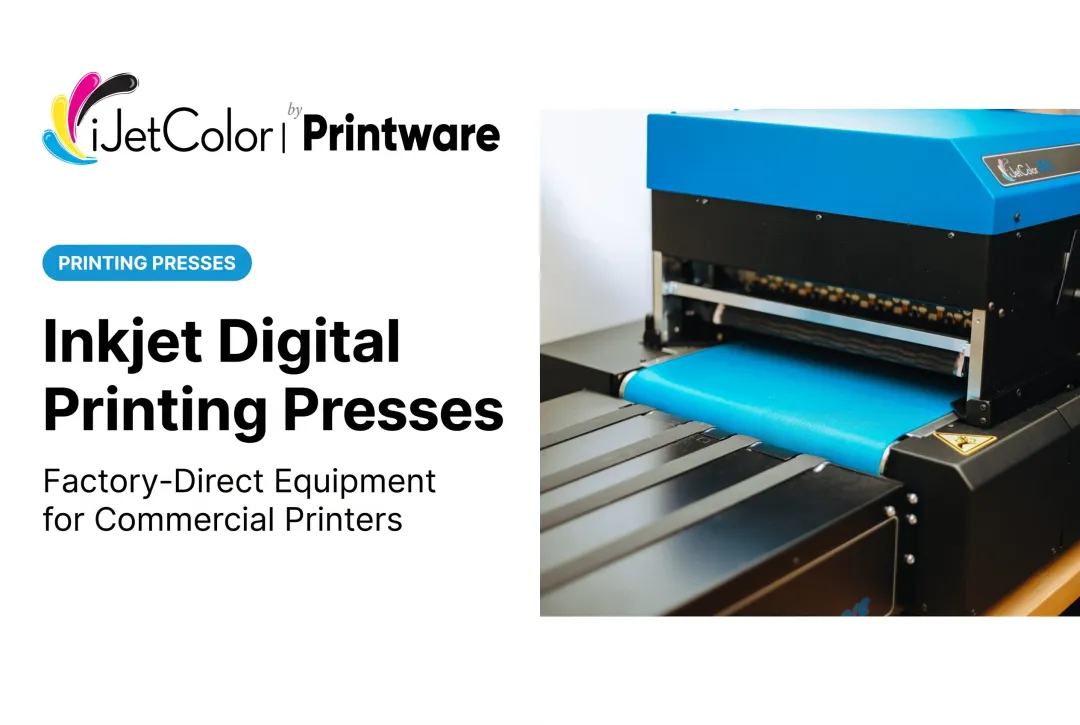
Under the hood, it runs on HP PageWide technology with the HP FI-1000 printhead for full-color printing on stock up to 11.75" x 17". That delivers the speed and image quality print buyers expect, without plate changes or the lengthy prep work offset requires.
Within iJetColor's lineup, the 1175 is the accessible entry point:
- HP iJetColor 1175C — a console-based industrial system running 6,210 to 10,000+ envelopes per hour
- HP iJetColor 1175 Pro + PXG — 10,000+ envelopes per hour, with an integrated PXG feeder for short-run packaging (paper bags, small corrugate)
- HP iJetColor 1275 Pro — up to 20,000 #10 envelopes per hour for the highest-volume operations
All of them, the 1175 included, can add iJetColor Flow 2.0, the DFE-based RIP software and printhead firmware upgrade that brings CMYK True Color, a Print Quality Optimizer and a cost calculator ($990, or $490 with iJetAdvantage; the PQ Optimizer tool is free for all 1175 models).
Every 1175 is sold manufacturer-direct. Instead of routing service calls through a reseller or third-party technician, buyers work directly with iJetColor's own service engineers — a distinction that matters when a machine goes down mid-run. The iJetAdvantage service and supply agreement adds 24/7 free phone technical support, a first-year non-wearable parts warranty, free unlimited training and next-day replacement printheads.

Key Features and Technology
Full-Bleed Printing and Ink Durability
The 1175 supports full-bleed printing on all four edges. Envelope designs with color running to the edge look noticeably more professional than pieces with white borders, a small detail print buyers notice on marketing mail and branded correspondence.
The ink itself is pigment-based HP ink — water, fade and scratch resistant — and formulated to hold up through mail handling and weather exposure, which is what separates it from the dye-based ink in office equipment.
Throughput and Setup Time
Across the 1175 platform, throughput scales with configuration:
- 1175: up to 7,000 #10 envelopes per hour
- 1175 Pro + PXG: 10,000+ envelopes per hour
- Monthly capacity (1175 Pro + PXG): 150,000+ envelopes
What really separates it from offset, though, is makeready. A new job on the 1175 typically requires just 1 to 2 test envelopes before full production starts. Operators report that setups run 1 or 2 envelopes for the most part, so waste stays low.
That's a stark contrast to offset, where every job change means a plate swap and a run of waste sheets before color and registration settle in.
Variable Data at Full Speed
The 1175 also handles variable data printing (personalized names, addresses, and content) without slowing down production. That matters as direct mail performance has shifted toward personalization.
In a Keypoint Intelligence survey of businesses using direct mail, 97% reported higher response rates from personalized mail, with 56% calling the improvement significant, according to research published by WhatTheyThink.
Beyond personalization, the 1175 handles media up to 1/8 inch thick, and the 1175C and 1175 Pro + PXG take envelopes up to 3/8 inch, so shops can run heavier pieces beyond standard #10 stock.
Cost Savings and ROI
For shops weighing the investment, the math comes down to three things: what the equipment costs to own, what it costs per piece, and how much labor and outsourcing it eliminates.
iJetColor sells the 1175 manufacturer-direct on its Ink-Only purchase plan, bundled with a 5-year service program, and offers equipment financing through Synergy Financial Resources — zero payments upfront, 90-day deferred payments, and $1.00 buyout, 10% PUT or FMV options. In-house production on the 1175 is faster and more profitable for short-run envelope production than offset, outsourcing, or toner.
Where the Savings Come From
- Eliminates outsourcing and vendor management, keeping quality and deadlines in the shop
- Runs with existing shop staff—most operators need little specialized training
- Minimizes makeready waste, so short runs don't bleed money on spoilage
- Removes plate, chemical, and blanket costs that offset jobs still carry

Ink cost per piece varies with envelope weight and how much coverage the design carries, and iJetAdvantage customers buy ink and wearable parts at a discount. Compared with offset, outsourcing, or toner, the press line is built to be faster and more profitable for short-run envelope production.
For a shop sending 5,000 envelopes a month to an outside vendor, bringing that volume in-house on a 1175 cuts costs and returns turnaround control to the shop. The margin gain and scheduling flexibility show up quickly on the invoice.
With 1,500+ customers and 2,500+ machines deployed nationwide, this cost performance holds across a wide range of shop sizes, not just a handful of case studies.
Applications and Use Cases
The 1175 fits a specific customer profile: businesses that need professional, full-color envelope output at volumes too small for offset but too large (or too frequent) for outsourcing to make sense.
Primary customer segments include:
- Commercial printers running mixed job types
- Printing franchises running high volumes of short-run envelope work
- Direct mail and mailing service providers
- In-house corporate and government print operations
Those shops typically run jobs like:
- Marketing mail and promotional envelopes
- Personalized direct mail with variable data
- Short-run full-color envelope work that used to go out of house
For padded mailers and light packaging substrates that standard envelope equipment can't run, the 1175 Pro + PXG extends the same platform to stock up to 1/2 inch thick.
iJetColor 1175 vs Offset and Toner Printing
Print shops evaluating the 1175 are usually comparing it against two alternatives they already know well: offset and toner-based digital presses. Here's how the comparison shakes out.
| Factor | Offset | Toner-Based Digital | iJetColor 1175 |
|---|---|---|---|
| Setup per job | Plate change + makeready | Faster than offset, still slower setup | Minimal makeready waste |
| Cost per piece (short runs) | High due to waste and plates | Higher CPP than production inkjet | More profitable on short runs than offset, outsourcing, or toner |
| Print speed | Fast at long runs only | Moderate | Up to 7,000 #10 envelopes per hour |
| Output durability | Varies by ink and stock | Standard toner adhesion | Pigment HP ink: water, fade and scratch resistant |
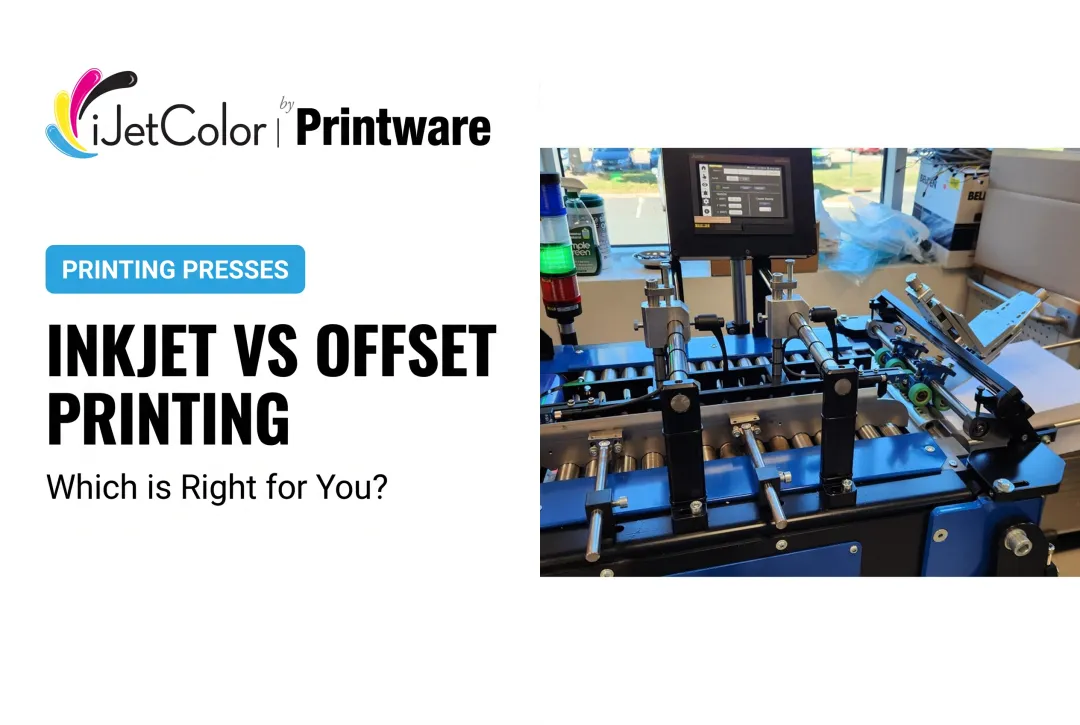
Setup and waste are where the gap is widest. Offset requires a plate for every job and a makeready period before color and registration stabilize. That process varies significantly by press age and automation level, according to WhatTheyThink's analysis of digital-versus-offset crossover points. The 1175 skips it entirely with a 1-2 envelope setup.
Speed and cost-per-piece favor the 1175 over toner. The press prints up to 7,000 #10 envelopes per hour with makeready measured in one or two pieces, which is what makes short-run envelope work more profitable in-house than through offset, outsourcing, or toner.
Durability is where pigment inkjet earns its keep for mail specifically. The pigment-based HP ink is water, fade and scratch resistant. Those factors matter when envelopes pass through sorting equipment, mailboxes, and weather before they reach a recipient's hands.

Why Choose iJetColor for Your 1175 Investment
Buying capital equipment is a long-term commitment. Look past the spec sheet at who stands behind the machine.
iJetColor's press line earned the 2020 PRINTING United Alliance Product of the Year award in the digital press category. That honor went specifically to the iJetColor Pro 1175P in a competition with more than 200 entries across 85 categories, according to the official PRINTING United Alliance announcement. The standard 1175 shares the same core engineering platform.
Beyond the award, three things stand out:
- Manufacturer-direct support: Customers reach iJetColor's own service engineers directly, rather than routing calls through a reseller network, with live response guaranteed within 60 minutes during business hours at (800) 456-1400 ext 2
- 40+ years of industry experience as Printware, long before the iJetColor brand existed
- 1,500+ customers and 2,500+ machines deployed across commercial printers, franchises, and institutional buyers nationwide
For a shop making a five- or six-figure equipment decision, that combination of proven technology and direct manufacturer support matters as much as the throughput numbers.
Frequently Asked Questions
What is the iJetColor 1175 used for?
It's a high-speed digital inkjet press for printing short-to-mid volume envelopes and direct mail. It handles full-color, full-bleed output and variable data personalization at production speed.
How fast is the iJetColor 1175 inkjet envelope printer?
The 1175 runs up to 7,000 #10 envelopes per hour. Higher-throughput models exceed 10,000 per hour, with monthly capacity above 150,000 pieces on the 1175 Pro + PXG.
How is the iJetColor 1175 purchased and financed?
It is sold manufacturer-direct on the iJetColor Ink-Only plan with a 5-year service program, and financing is available through Synergy Financial Resources with zero payments upfront and 90-day deferred payments.
What ink technology powers the iJetColor 1175?
The platform uses an HP FI-1000 PageWide thermal inkjet printhead with pigment-based HP ink that is water, fade and scratch resistant. That durability matters for mail that faces handling and weather.
Does the iJetColor 1175 support variable data printing?
Yes. It prints personalized addressing and content at full production speed, so targeted direct mail stays on pace with the rest of the job.
What's the difference between the iJetColor 1175 and the 1175 Pro + PXG?
The 1175 Pro + PXG offers higher throughput, exceeding 10,000 envelopes per hour, and adds an integrated PXG feeder for packaging substrates; its platform won the 2020 PRINTING United Alliance Product of the Year award as the iJetColor Pro 1175P. The standard 1175 is the accessible entry point in the same product family.